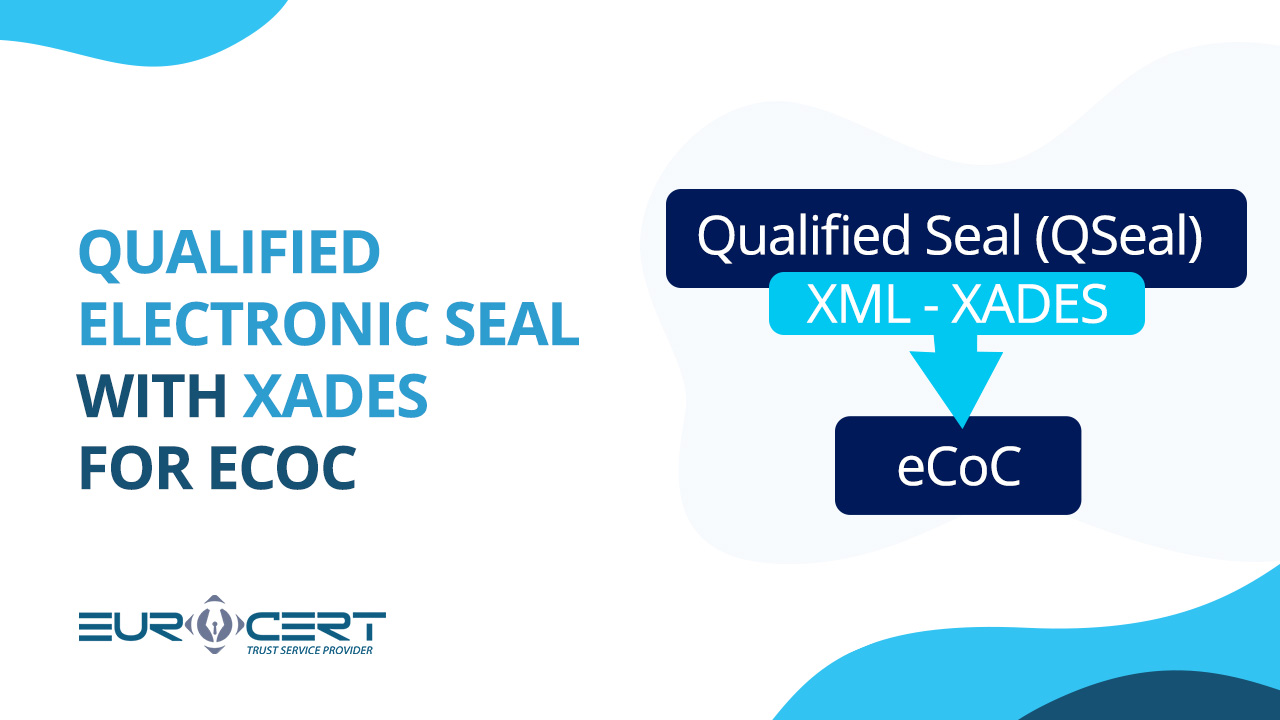
A qualified XAdES electronic seal for eCoC is a digital tool used to generate and certify the authenticity of digital certificates of conformity issued by vehicle manufacturers in the EU and the United Kingdom. Find out what requirements an e-seal must meet, why the XAdES format is used for eCoC, and how to obtain a qualified XAdES electronic seal.
What is a qualified XAdES electronic seal for eCoC?
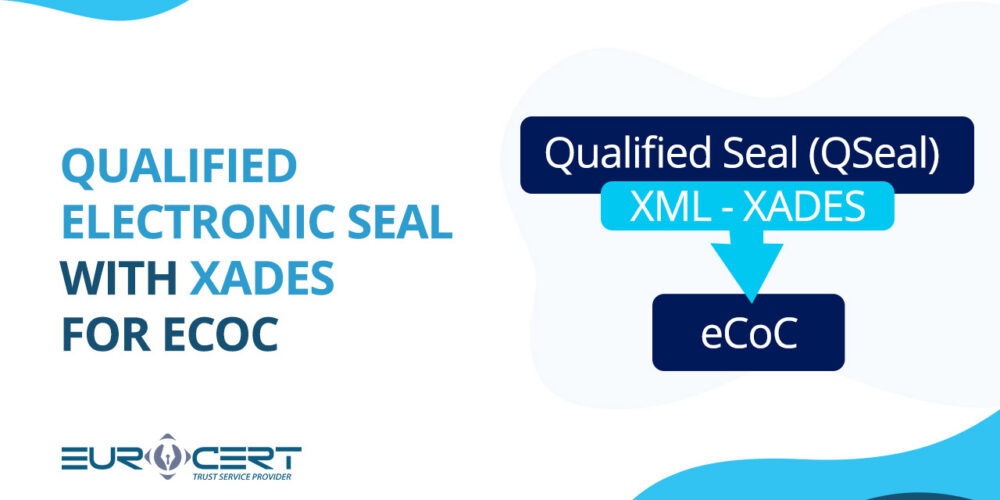
A qualified electronic seal in the XAdES format is a digital tool designed for signing electronic documents in XML format. It is equivalent to a company stamp on a paper document and is used, among other things, to sign electronic Certificates of Conformity (eCoC). Vehicle manufacturers will be required to issue digital versions of certificates from 29 November 2026 in accordance with Regulation (EU) 2018/858 of the European Parliament and of the Council of 30 May 2018 on the approval and market surveillance of motor vehicles and their trailers, and of systems, components and separate technical units intended for such vehicles.
A qualified e-seal is issued by certified trust service providers and complies with the standards of the EU eIDAS Regulation. The basic data contained in a qualified electronic seal for eCoC includes:
- data identifying the entity applying the seal, e.g. the vehicle manufacturer or one of its subordinate entities,
- a qualified electronic seal certificate,
- a cryptographic hash of the signed document,
- information about the cryptographic algorithm used,
- the date and time when the seal was applied,
- data enabling subsequent verification of the certificate’s validity.
Applying a qualified electronic seal ensures the authenticity and full integrity of the document. Any modification to the document requires it to be sealed again, which increases the security of electronic document workflows.
The XAdES standard is currently available at several signature levels, which differ in terms of security features and long-term verification capabilities:
- XAdES-BES (Basic Electronic Signature) – the basic level containing the essential signature data and the certificate of the entity applying the seal,
- XAdES-EPES (Explicit Policy-based Electronic Signature) – an extension of XAdES-BES that specifies a particular signature policy,
- XAdES-T (Timestamped) – includes a qualified timestamp confirming the time when the signature or seal was applied,
- XAdES-LT (Long Term Validation) – enables long-term verification by including certificate status information (CRL/OCSP),
- XAdES-LTA (Long Term Archival) – the highest level, intended for long-term document archiving and using additional timestamps.
A qualified XAdES electronic seal used to generate and certify an Electronic Certificate of Conformity (eCoC) must meet the requirements of the eIDAS Regulation governing electronic identification and trust services within the European Union.
You may also be interested in this article:
Why is the XAdES format used for eCoC?
The XAdES (XML Advanced Electronic Signatures) standard is widely used in the digital processing of eCoC because it enables qualified electronic seals or qualified electronic signatures to be applied and verified while ensuring the highest level of document security and reliability.
Moreover, XML is a standard format for data exchange between IT systems. In the context of the Electronic Certificate of Conformity, it enables vehicle technical information to be stored in a structured manner, including manufacturer data, the VIN number, type-approval parameters and detailed technical specifications. The use of XML makes it possible to automatically process documents shared by manufacturers, importers, vehicle registration authorities and other entities involved in the type-approval procedure.
Thanks to XAdES, an eCoC recipient can verify whether the document was signed by the appropriate entity and whether its content has remained unchanged since it was signed. Even the smallest change to the content requires the qualified-certificate seal to be applied again. In practice, this means that a digital Certificate of Conformity provides the highest level of trust, equivalent to a traditional paper document bearing a signature and stamp.
IMPORTANT: XML and XAdES perform different but complementary functions. XML is responsible for the structure and storage of the data contained in the eCoC, while XAdES provides the signature and security layer applied to the document.
Would you like to implement eCoC file signing or obtain more information about it?
Leave your contact details and talk to us about our solutions.
How to obtain a qualified XAdES electronic seal for eCoC?
A qualified XAdES electronic seal for eCoC is issued by a certified trust service provider such as EuroCert and can be obtained entirely remotely or directly at a physical location, for example from an authorised provider. Below is a detailed step-by-step guide on how to obtain an XAdES seal.
- Choose a trust service provider – select a certified trust service provider authorised to issue qualified electronic seals, such as EuroCert, one of five qualified providers in Poland.
- Purchase a qualified electronic seal – choose the appropriate seal format, for example a qualified cloud-based ECSigner electronic seal (accessed using a smartphone and an authentication app with OTP codes) or a qualified electronic seal on a card (cryptographic card + reader). Choose the validity period of the qualified certificate, the identity verification method and pay for the order.
- Identity verification – complete the identity verification process, which involves checking the company’s details and the details of the organisation’s representatives or authorised proxies. With online verification, the entire process may take approximately 15 minutes. You can also choose to visit one of the authorised sales points or arrange for a mobile verification officer to visit your office (VIP service).
- Receive your qualified electronic seal – after successful verification, you will receive access to the e-seal, instructions for its activation and use, the required software and, in the card-based variant, a cryptographic card with a reader.
- Installation and activation – install the software according to the instructions provided and start using the qualified electronic seal to sign eCoC documents, i.e. digital vehicle Certificates of Conformity, the use of which will become mandatory from 29 November 2026. Before using it for the first time, perform a test sealing operation and check that the process works correctly.
You may also be interested in this article:
Qualified XAdES electronic seal for eCoC – summary
A qualified XAdES electronic seal for eCoC is a key element of the digital process for issuing and verifying vehicle Certificates of Conformity. Thanks to compliance with the eIDAS Regulation, it ensures the authenticity of the document’s origin, the integrity of its content and the possibility of long-term verification. The use of the XAdES format in XML documents enables secure data exchange between manufacturers, importers and public authorities. Although the requirement to use eCoC will come into force on 29 November 2026, it is worth preparing for it now by obtaining a qualified e-seal from EuroCert.